AI Production

Client
Bally's Interactive
Timeframe
2+ years
Year
2024-2026
The situation
Generative AI arrived in creative production faster than the rules around it. Across the market, creative studios and professionals responded in one of two ways: ignoring it, or adopting it carelessly. Neither was an option for us. We produce creative in a highly regulated environment, where legal and compliance teams review work before it reaches the public, where an IP licensor can veto an entire format, and where audience trust is a commercial asset.
The challenge was never whether to use AI. It was how to streamline production with AI, making it a reliable part of the workflow, enhancing specific stages of the process rather than making the entire pipeline depend on it.

What we established
We built the team's AI production strategy from the ground up, treating governance as part of the creative pipeline rather than an obstacle to it:
Governance principles applied consistently across the programme, covering IP risk, disclosure and labelling, audience trust and data protection. I treated vendor terms, including IP indemnity, as procurement decisions rather than small print.
Hybrid workflows by design. Output was never 100% AI-generated. We used AI where it earned its place: repetitive tasks, expressions and coding, image and video generation. Everything was then finished with traditional craft, motion design, VFX, editing and sound design, with generation planned around the post-production that would follow it.
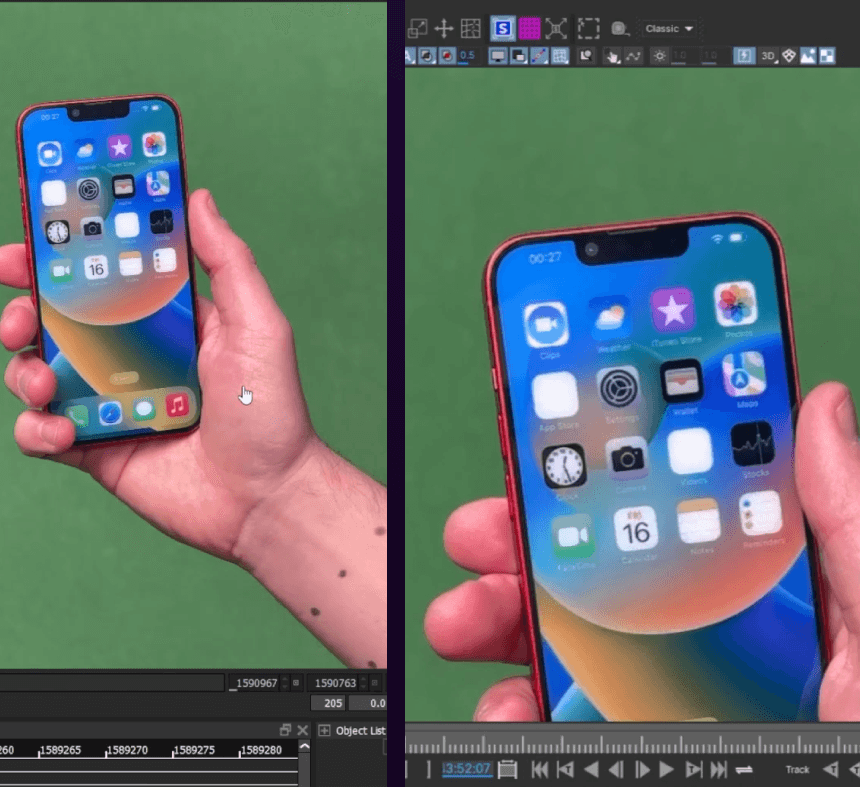
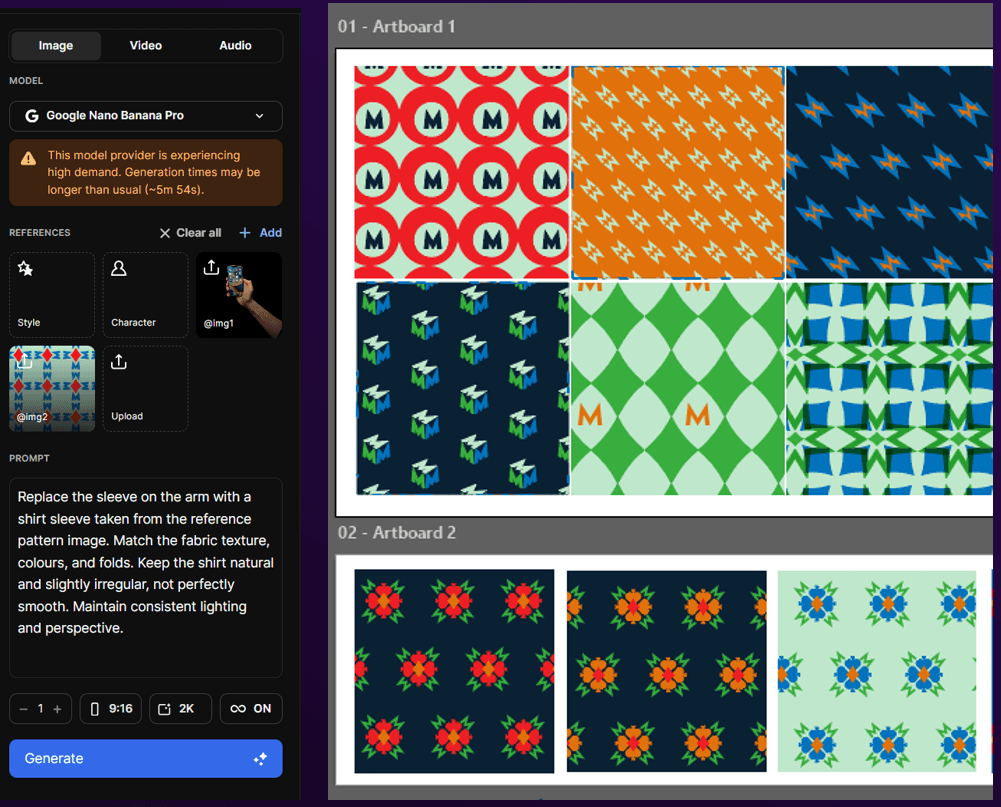
Two workflows formalised into standard production. A brand icon system, where we trained a model on our existing 3D concepts to generate new on-brand illustrations, cutting production time from weeks to days and later reused across other brands in the portfolio. And a compositing workflow mixing live-action and AI: hands holding smartphones filmed in studio, screens replaced with product, and AI-generated sleeves and accessories tracked back onto the real footage to connect the shot to the brand.
The hardest test: an outright IP embargo
Early in the programme, Hasbro, the IP owner behind Monopoly, embargoed AI-generated people in licensed content, unconvinced by the quality of AI-generated video at the time, particularly where people were involved. A content format the team relied on was suddenly non-compliant.
The easy responses were to abandon the direction or escalate the conflict. Instead, we designed a four-phase rollout that respected the embargo while keeping the capability moving:
Assets only. Backgrounds and locations, no humans.
Hands and torsos. Real product shown in hand, no faces.
Full-body and faces as stills. AI-generated images animated with motion graphics, not generated video.
AI-generated video, still within the hybrid workflow: green-screen composites, screen replacements done with standard VFX, motion graphics layered over the top.
Within the early phases, I led the video department to a bridge between the first two: real hands filmed live, with wardrobe and styling generated by AI and tracked back onto the footage with VFX techniques. The format stayed alive, the embargo was fully respected, and the licensor relationship stayed strong.
We reached the final phase during the World Cup campaign, with AI-generated video in live creative, finished to the same standard as any conventional shoot.
The result
AI-assisted formats moved from experiments into standard production, validated in live campaigns with a significant improvement in acquisition efficiency over conventional creative
Production time and external costs were reduced by implementing AI-assisted VFX and animation workflows, with generation always planned around the post-production layer that followed
The programme ran for over two years across a multi-brand portfolio, with compliance maintained throughout
The principles outlasted the individual tools they were shaped around, which is the point: tools change monthly, judgment holds

Why this case matters
Plenty of creative leaders can demonstrate AI experiments. Very few can demonstrate AI in sustained production inside a regulated environment, under a licensor's scrutiny, with legal risk treated as part of the brief. The scarce skill is not prompting a model. It is knowing which questions to ask before the model is allowed anywhere near the brand, and building workflows that answer them by default.

Discover other projects
Dive into our diverse collection of innovative projects, where creativity meets cutting-edge technology to solve real-world challenges