Broadcast
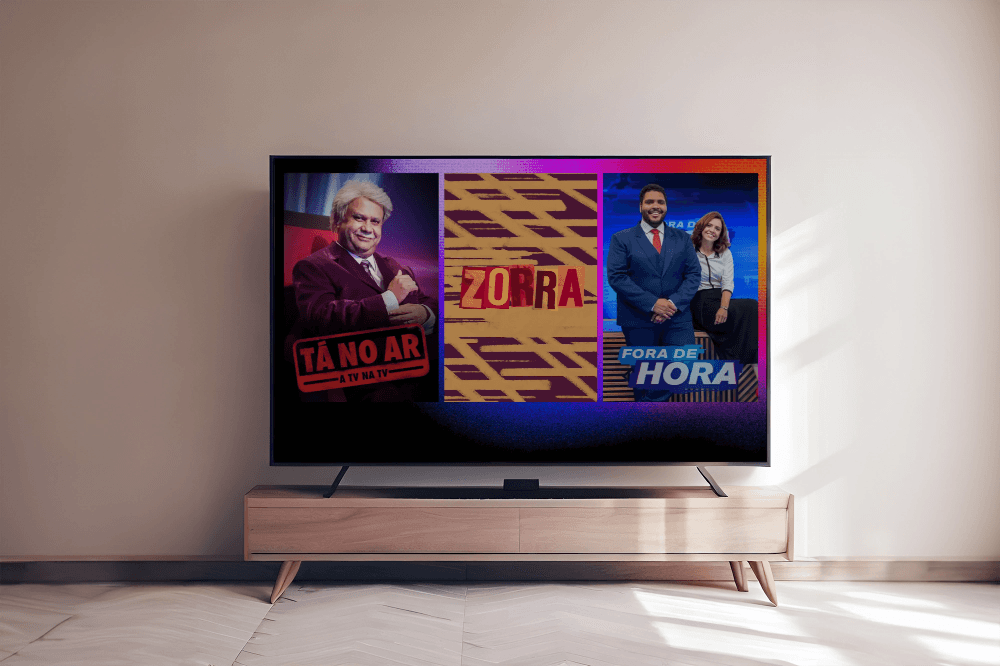
Client
TV Globo
Timeframe
3 years
Year
2017-2020
The situation
TV Globo is Brazil's largest broadcaster, and its primetime comedy shows are among the most visible programming in the country. Comedy is a uniquely demanding environment for motion design: every week brings new sketches parodying films, TV formats and pop culture, each needing bespoke visual effects, interfaces, fake products and graphic jokes, all locked to an immovable air date and subject to editorial change until the last minute.
Over 3 years and three shows, my role there evolved from executing assigned shots to defining how the shows looked, and that evolution is the case.
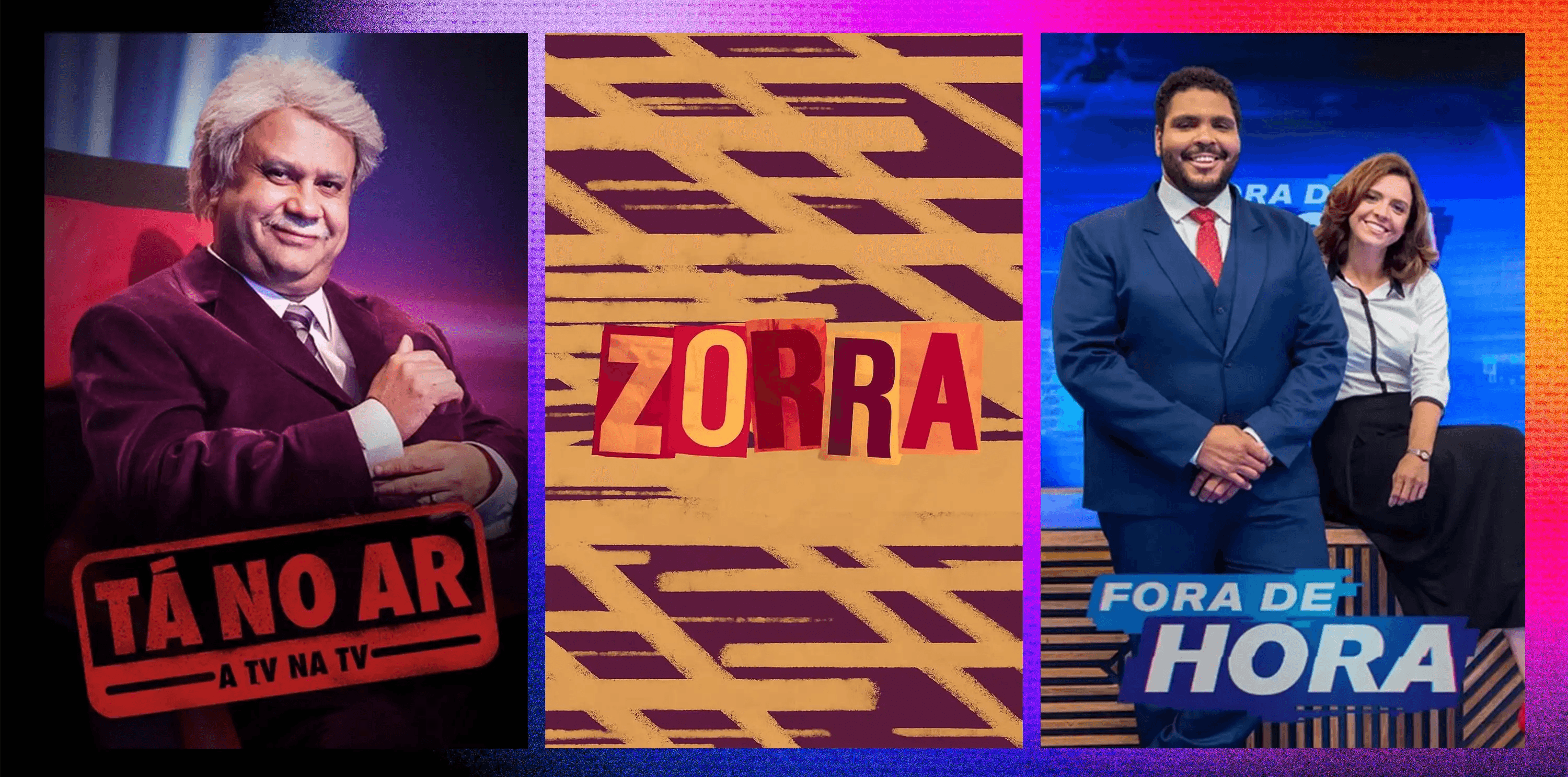
Tá no Ar: the craft years
I joined the team of Tá no Ar, a sketch show built on parodies of famous films and TV formats. The work was pure applied craft: complex VFX and animation for scenes assigned to me, recreating blockbuster visual effects for parody, one sketch drawing on the Avengers films, and building fake product advertising, invented hair-growth brands and the like, designed to land the joke.
The work reached full character-VFX territory. For one sketch I created a complete digital double: a woman-fish creature modelled, shaded and animated in Autodesk Maya and rendered in Arnold, replacing the actress entirely in the final shot, from blue-screen plate to finished composite. It was one of the most watched shows of its kind, and it taught the discipline that everything after was built on: broadcast-quality VFX, delivered weekly, in service of comedy timing.
Zorra: a designer in the directors' room
Moving to Zorra, the network's Saturday-night comedy institution, my way of operating changed into something unusual for a designer at the network.
Each week, the show's creators and directors met to plan what would be filmed: which sketches, how they connected, where the visual jokes lived. Designers were not normally in that room; the VFX supervisor attended and distributed tasks downward. I sat in those planning sessions directly, every week, giving opinions and defining the motion graphics, animations and visual interventions at the moment the show was being conceived, not after.
The VFX supervisor remained responsible for on-set supervision, ensuring blue screens, lighting and plates were shot for clean compositing, and reviewed my work, but I operated with a high degree of independence. At the start of each season I created the show's new transition language, the connective tissue between sketches, and delivered the visual treatments that turned sketches into graphic jokes: a scene styled as a GTA-era video game, complete with game interface and tracked dialogue balloons, is a fair sample of the weekly brief.
The technical ceiling was high, and the "Esteira da Vida" sketch is the clearest example. Fernando Caruso had to age some sixty years in twenty seconds, on camera, with no prosthetics or makeup of any kind. Shots like that are not one discipline; they are several, running in parallel to a single air date, and I owned all of the 3D: the actor's head sculpted as a digital double in ZBrush from the tracked plate, then hair, beard and moustache grown, groomed and simulated procedurally in SideFX Houdini, with animation controls rigged so the growth could be timed to the joke, and rendered to hand on for the composite. Feature-film technique, delivered on a weekly comedy deadline.
The rest of the shot belonged to specialists in their own disciplines: 3D camera tracking by Leonardo Lino, the ageing of the face itself as 2D matte painting by Tiago Silverio, and final compositing by Gabriel Studart, under VFX supervisor Marcelo Mariz. Globo's own Gshow published a step-by-step breakdown of exactly that pipeline, crediting each stage by name, alongside a video in which I walk through how the effect was built. Read the breakdown on Gshow.
For most seasons I worked this way alone. Later seasons added one, then two designers working under my steer and direction, and for complex shots I directed compositors and 3D animators as the sketch required.
Fora de Hora: building a show's entire visual system
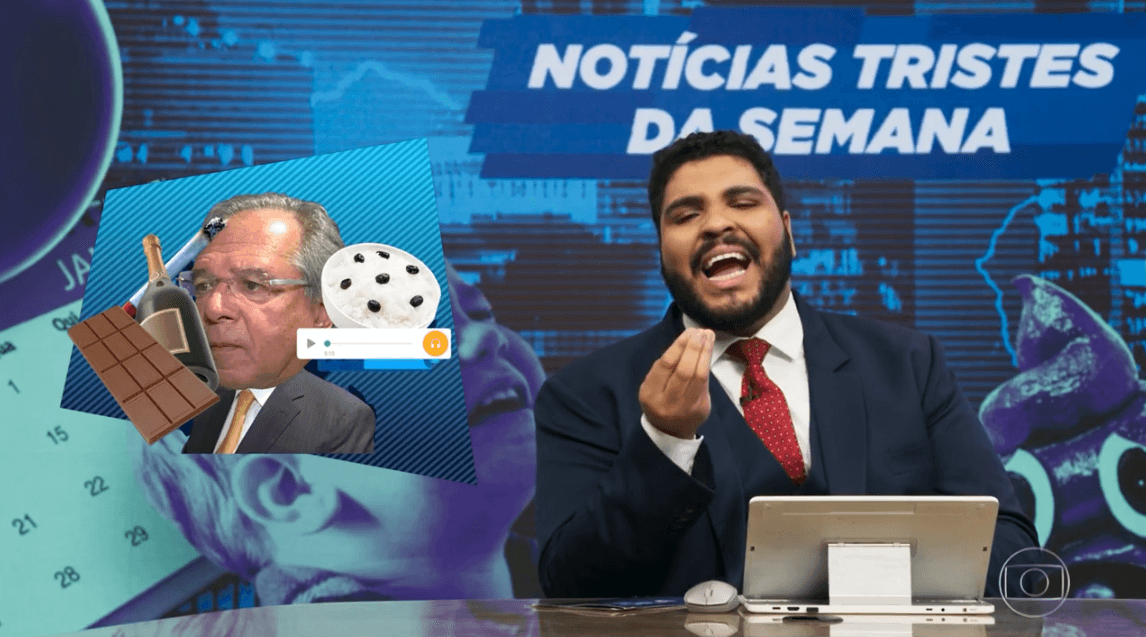
When Globo created Fora de Hora, a satirical take on primetime live news, filmed in a studio wrapped in LED screens like a real newsroom, I was tasked with creating the show's entire motion graphics system.
I designed the system itself, icons, illustrations, transitions, the complete visual language, everything on screen except the intro sequence. Once the language existed, I led its production at scale: around 3 motion designers working with me, plus steer and direction across 6 to 7 visual effects, compositing and 3D artists rotating through different sketches. I was not the VFX supervisor; I was the lead motion graphics designer for the show, and the system was mine.
The delivery: 253 animations across 23 visual categories, including 69 LED panel artworks and 46 overlay animations, produced in roughly 2 months for the season-one launch.


Recognition
Troféu Imprensa 2019, won. Brazil's longest-running television award, voted by the press, comparable in stature to a national Emmy. Zorra took Best Comedy Program with our visual work on screen
Featured Motion Designer, TV Globo, 2018. An internal recognition selecting the network's standout motion designers, awarded during the years I was operating inside the directors' room
Prêmio Contigo! 2020, shortlisted twice, with both Zorra and Fora de Hora recognised in the same year
IMDb-credited for visual effects work across the era's programmes
Public consolidated ratings suggest the work reached an enormous audience: Zorra's 4th season peaked at 25.4 ratings points, roughly 5 million viewers in Greater São Paulo alone on public conversion figures, with same-night leads over competing programming ranging from 40% to 190%

Why this case matters
The arc here is the point. Assigned shots, then a seat in the planning room, then a show's whole visual system: each step was earned by the previous one, and none of it came from a job title. The trust of directors is the scarcest currency in broadcast, and it is won by consistently turning half-formed comedy ideas into finished visual language under a weekly deadline. That pattern, earn the room, define the system, then lead others to produce inside it, is the same one running through everything I have built since.
Discover other projects
Dive into our diverse collection of innovative projects, where creativity meets cutting-edge technology to solve real-world challenges